
Pre-Planning a Funeral: Why It Matters
Why do funerals tend to be arranged by the family?
Facing death can be difficult, and here in the UK, we are particularly bad at talking about it. The topic is emotional, which makes us uncomfortable. It also reminds us of our own mortality, and that can feel scary. Talking about death is awkward, and in many families, almost taboo or considered rude, because of the discomfort caused as we face the fact that loved ones will not be around forever.
However, this avoidant social norm causes lots of problems. Necessary legal paperwork and decisions may not be in place, or not easily accessible, when someone dies. This means complex legislative processes have to be negotiated, which can take years and put serious pressure on those left behind. A lack of clarity can cause stress and divisions within a family - a sad legacy to leave.
There is also a funeral to be arranged. While experiencing acute grief, families and friends are expected to make arrangements, organising and funding a significant event. They are likely to worry about getting everything just right, at a time when they might be struggling to think straight. While they are vulnerable, they might be persuaded to buy a funeral package that doesn’t truly meet their needs, or their budget.
One of the most common things families report is the pressure they feel to represent the person who has died faithfully. This can cause regrets once the funeral is over, that maybe things weren’t exactly as their person would have wanted. These feelings can develop into guilt if final wishes come to light at a later date, such as once the house is cleared, and requests have not be fulfilled. It is a lot to deal with alongside a loss, and can make it harder to process grief.
The benefits of pre-planning
All of these difficulties could be avoided by talking about the reality of a life ending before it happens. This requires a degree of pragmatism, but it does not need to be upsetting. There is plenty of evidence that being brave enough to overcome the initial discomfort of talking about death can offer many benefits, both to the person who is dying and to their loved ones.
Making active choices about the events surrounding their own death can give someone an increased sense of control, letting them choose how they want their life to be celebrated. Addressing ‘the elephant in the room’ opens a path to more honest, heartfelt conversations and reduces missed opportunities. It can strengthen bonds and enable meaningful, honest dialogue, letting people say what they want to say and lessening regrets for things left unspoken.
Planning ahead also lightens the decision burden and uncertainty for those left behind. Family members are safe in the knowledge that their loved one would have been happy with the arrangements, and are able to focus on supporting those left behind and attending to their own grief.
How we can help
At Grave Expectations, we offer support for difficult conversations around death, and can advise you on how to approach uncomfortable subjects. We could talk through ways to make your feelings known, or how to document your final wishes before they are needed.
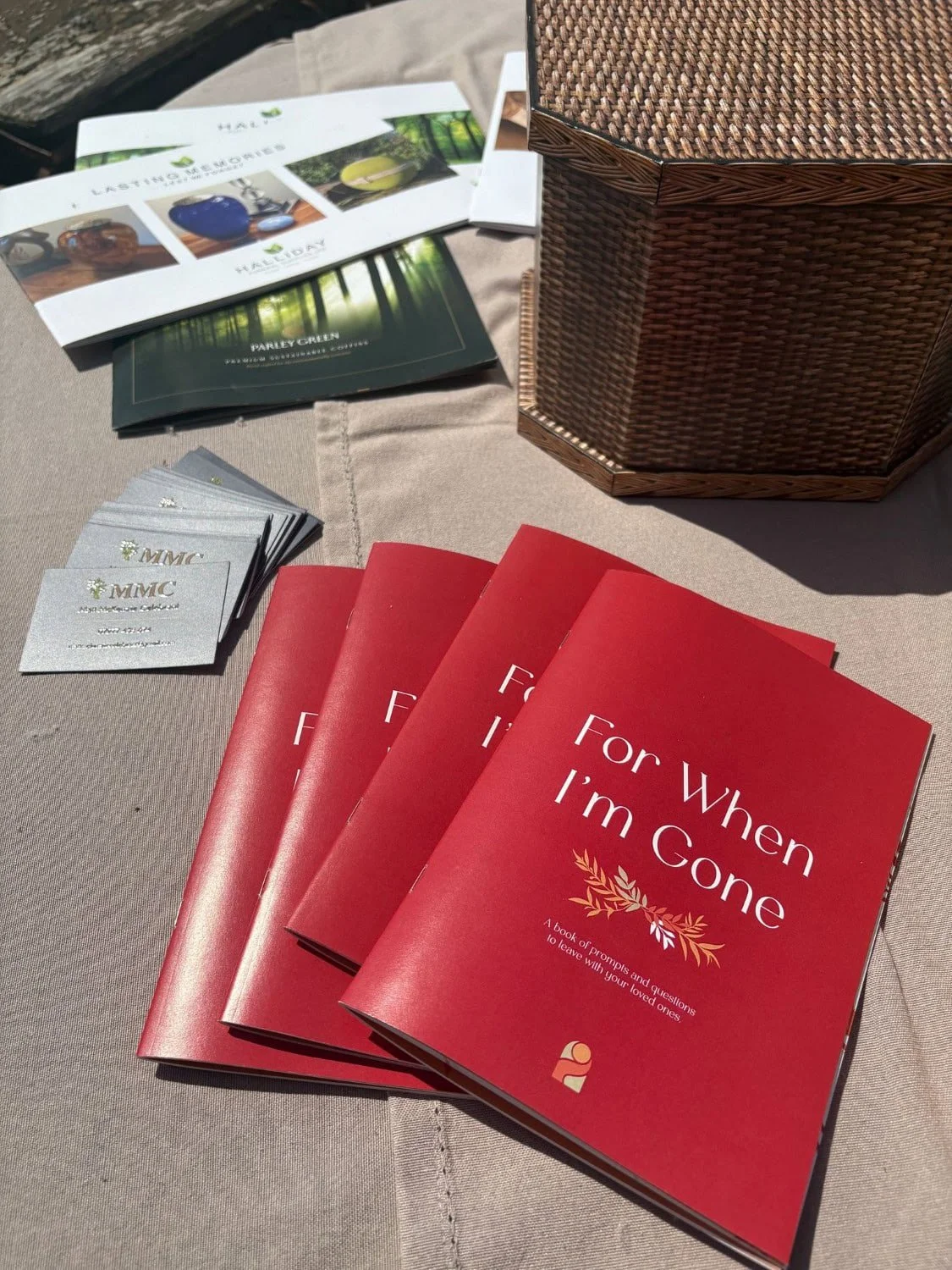
Our handy booklet, For When I’m Gone, can act as a place to collect your funeral choices and important information, such as bank accounts and passwords, to either store or pass to a loved one. There is even space to write down funny stories you would like sharing, to help people to remember you as you want to be remembered. And soon, we will be publishing a practical, myth-busting, warm-hearted guide, For When The Time Comes, to help people make thoughtful preparations for the future, without awkwardness or fear.
We believe everyone should have the ending they deserve, with each farewell as unique as the individual, and are here to help you navigate death and reduce overwhelm.