We all take part in grief rituals, whether we realise it or not. Funerals are grief rituals, as are laying flowers on a grave, or raising a toast to those no longer with us. There is much evidence to support the benefits of more personalised grief rituals as a method of processing difficult emotions around loss, and provide a sense of adjustment, acceptance, comfort or control. We will explore how to develop a grief ritual and why this might be helpful at a time of loss.
The word, grief, originates from the Latin word, gravare, meaning weighty or burdensome (from gravis, meaning heavy), and the French word grever, meaning to afflict, burden or oppress. Most of us know that feeling – grief can feel exhausting and all-encompassing. When those around us are also grieving, this can sometimes add to the weight, as we try to support them with their burden, too.
It might be useful to make a space away from other people, to give you an opportunity to experience your own grief without feeling responsible for others. There are many different forms that grief rituals can take. Maybe you have something that belonged to your loved one and holding it makes you feel closer to them, or you listen to their favourite song. Maybe you make a space just for them, by planting a tree, or creating a little alter in your home to honour them and light a candle or incense, as practiced across cultures for millennia. Maybe being in nature helps you to regain perspective and feel closer to the energy source or god, whatever you perceive that to be, and this brings a sense of comfort. Or maybe it is going to your person’s favourite place or doing their favourite activity, to bring back happy memories.

There are many different forms that grief rituals can take.
At Grave Expectations, we encourage you to develop your own rituals, personal to you and able to be practised whenever you need.
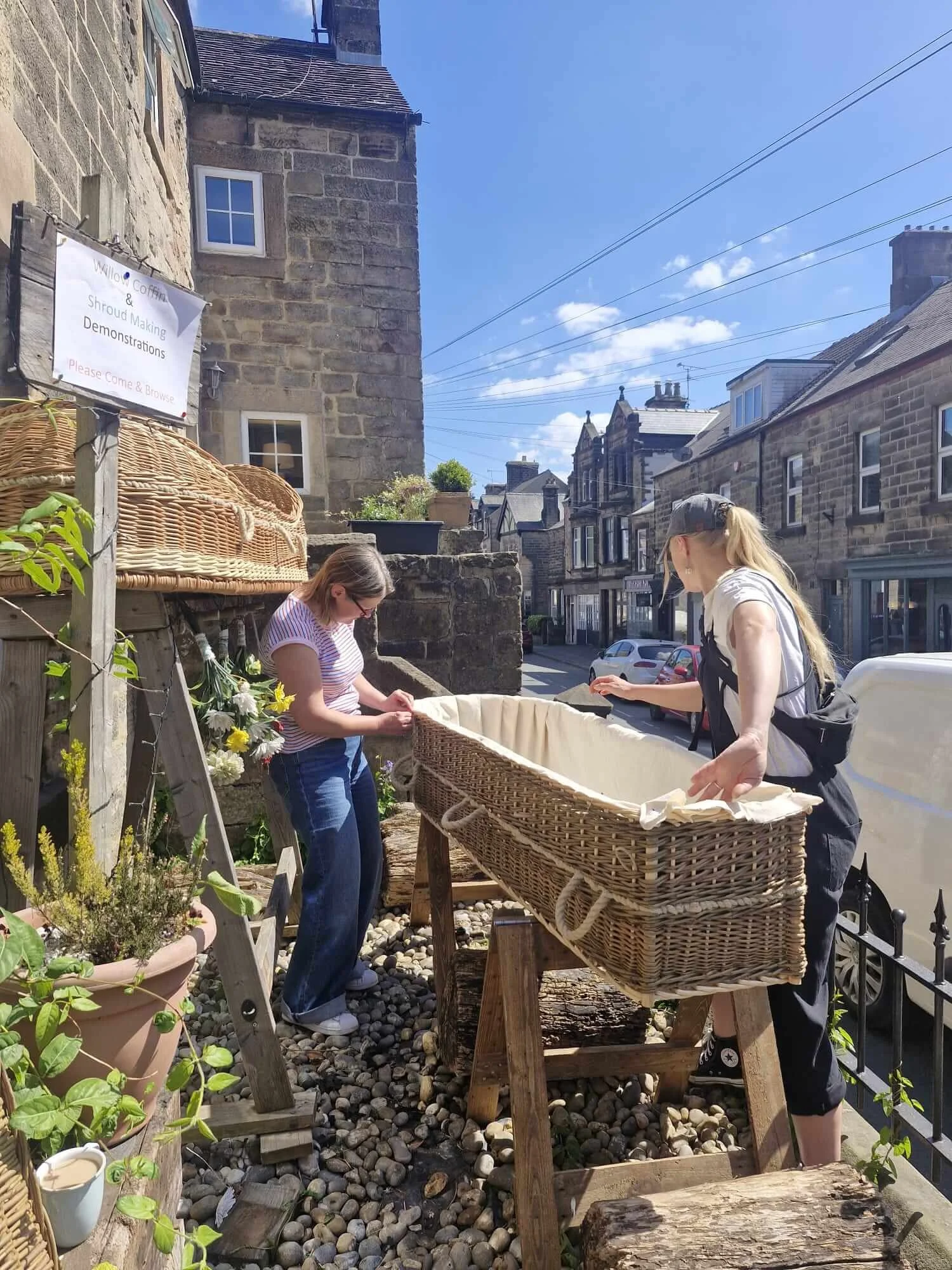
We also offer opportunities for communal grief, such as our death cafes and group sessions, which include art groups and willow weaving, to support you in your grief journey.
Whatever you choose, research has found that these types of rituals, however they are carried out, enable people to regain a sense of control after a loss. By carving out space for grief and creating a ritual which feels meaningful, this supports emotional release and acceptance. These rituals been proven to actually reduce feelings of grief. They can lighten the burden, and by integrating them into your own space and routine, they can sustain you in the context of your daily life more successfully than infrequent communal events such as memorials. They also represent a personal connection, rather than shared grief and remembrance.
Some people might want to create a ritual with their person while they are still alive. Sharing stories or meaningful possessions can be a way of passing down legacy as we prepare for death, knowing that our loved ones can create rituals around these when we are no longer here. This can bring a shared acknowledgement of death which provides comfort, on both sides, in knowing that we will not be forgotten but will continue to be celebrated in a way which is meaningful to us.
There is also a place in grief for shared rituals, such as memorial events or communal visits to a grave. These, too, can be personal and unique, and might involve an annual visit to a special place or preparing their favourite meal. Whilst the grief process can be very personal and vary greatly between people, knowing there are some common experiences can bring comfort and remind us that we are not alone.
In cases where the person who has died has played a more complex role, grief rituals may take a different form. Not everyone who dies or leaves is a ‘loved one’, and loved ones may have also caused pain. In these cases, grief rituals can be an opportunity for healing, letting go of painful memories and trauma, and seeking closure. Sometimes, writing a letter or a poem to express emotions might be useful and, although difficult, can help release feelings that had to be suppressed while the person was alive. Instead of saving your writing, this could then be burned, or wrapped around a rock and thrown into the sea, to symbolise liberation from the impact of hurt or abuse that can come with death.
At Grave Expectations, we encourage you to develop your own rituals, personal to you and able to be practised whenever you need, and we can help you do this. We also offer opportunities for communal grief, such as our death cafes and group sessions, which include art groups and willow weaving, to support you in your grief journey. To aid the transition between life and death, loved ones can help weave the coffin you will one day rest in, or can help wash and dress your body before for its final journey. While grief can feel heavy, no-one should have to carry it alone.